









“They were different from everyone else.”
That’s how Peter Barrall remembers the Anglo-Indian princesses Sophia and Bamba when they visited Walnut Tree Cottage in Blo’ Norton, a tiny village in the sandy heathlands of Norfolk.
It was 1939. After the outbreak of World War II, Barrall – then six – had been evacuated from his school in London to the estate owned by the daughters of Duleep Singh, the last ruler of the Sikh empire and last Indian owner of the Koh-i-Noor diamond.
Barrall, now 92, remembers spotting Sophia and Bamba on their occasional visits to the property. Sophia, often wearing a sari, was friendly. Bamba was more imperious.
He never saw their elusive middle sister, Catherine, who spent much of her adult life in Germany and therefore may have had less affection for East Anglia, where all three princesses grew up.
Barrall had been coached by the housekeeper never to approach the women first. But if one of them spoke to him, he was to say, “Good morning, your highness.”
A short video of Barrall’s recollections shatters the proverbial glass case behind which history is typically displayed. It is among the many charms of a new exhibition, “The Last Princesses of the Punjab”, in London’s Kensington Palace, where Queen Victoria was born.
The location is somewhat subversive, as the Crown was both destroyer and architect of Duleep Singh’s family fortunes after the British annexation of the Punjab in 1849.
The fascinating, transnational lives of the three sisters have been more obscure than the diamond briefly in their family’s possession. That makes this exhibition, which runs through November, emblematic of a sea change in taking more seriously the actual lives shaped by colonialism, rather than just – to use a Hindi word – the loot.
What makes the princesses so compelling – and, improbably, relatable – is what historian Mishka Sinha calls their “multiple marginal” quality: mixed-race colonial subjects, pioneering female students, one a suffragette, another an antifascist.
Sinha is the curator for inclusive history at Historic Royal Palaces, a charity that manages six unoccupied British royal palaces, including the Tower of London and Hampton Court.
“With these women, there’s something for everyone,” Mumbai-born Sinha told me last month, at an exhibition preview.
Duleep Singh was the youngest legitimate son of Maharaja Ranjit Singh, the “Lion of the Punjab”, whose death in 1839 was tailed by years of bloody anarchy. As a child, Duleep spent some years as puppet ruler of the Sikh empire until it was fully annexed a decade later, after the Anglo-Sikh Wars.
Duleep Singh’s mother was jailed and the 11-year-old deposed prince became the ward of a Scottish couple, They brought him to London in 1854.
There, the handsome, turbaned Duleep Singh became an unlikely bon vivant, a favorite of Queen Victoria, a confidante of the Prince of Wales and a very famous shot. In 1864 he married Bamba Müller, the illegitimate daughter of a German businessman and an Abyssinian concubine, in Egypt. She had grown up in a convent and spoke no English.
They set up house in rural Suffolk and had six children in the 1860s and 1870s: three boys and three girls, all baptised in the Church of England. Each received a fairly typical upper-class British upbringing, including Eton for the boys.
During their childhoods, they were forbidden from visiting India, where it was feared the spectre of the maharaja would arouse anticolonial sentiment. Duleep Singh eventually turned against the crown and absconded with a chambermaid to Paris in 1886. His first wife, who never quite adjusted to England, died soon after, from complications of alcoholism.
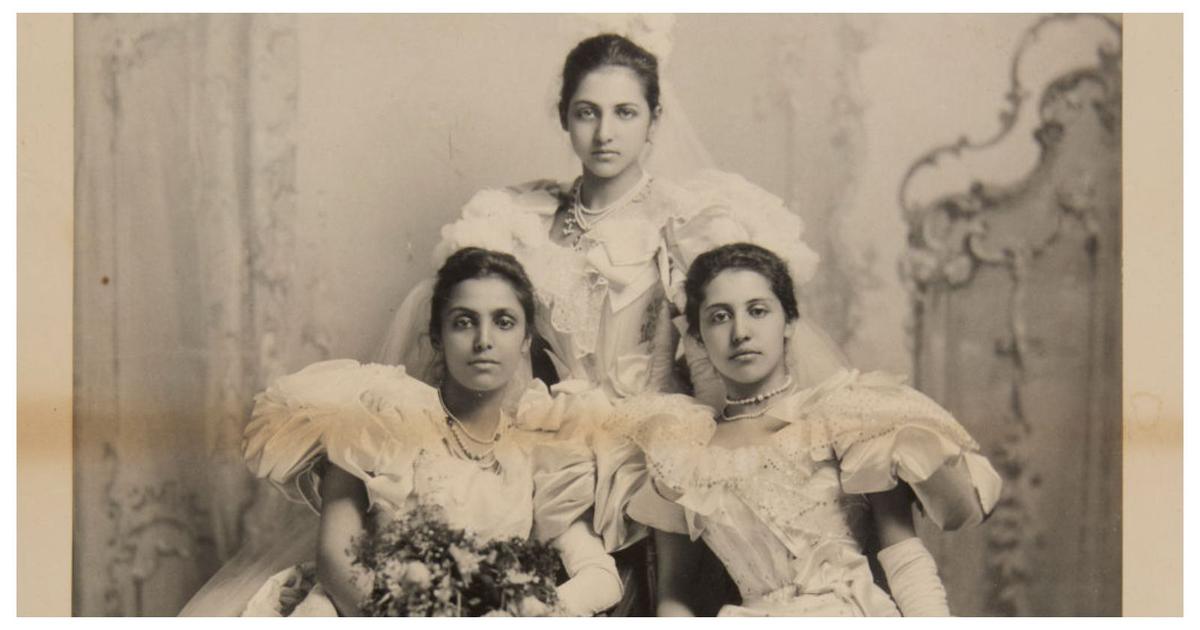
On the cusp of adulthood, Duleep Singh’s daughters were effectively orphaned and became wards of the India Office. Though all three were brought out as debutantes in 1895, none of them made conventional marriages. They scattered rather far in adulthood, both geographically and professionally.
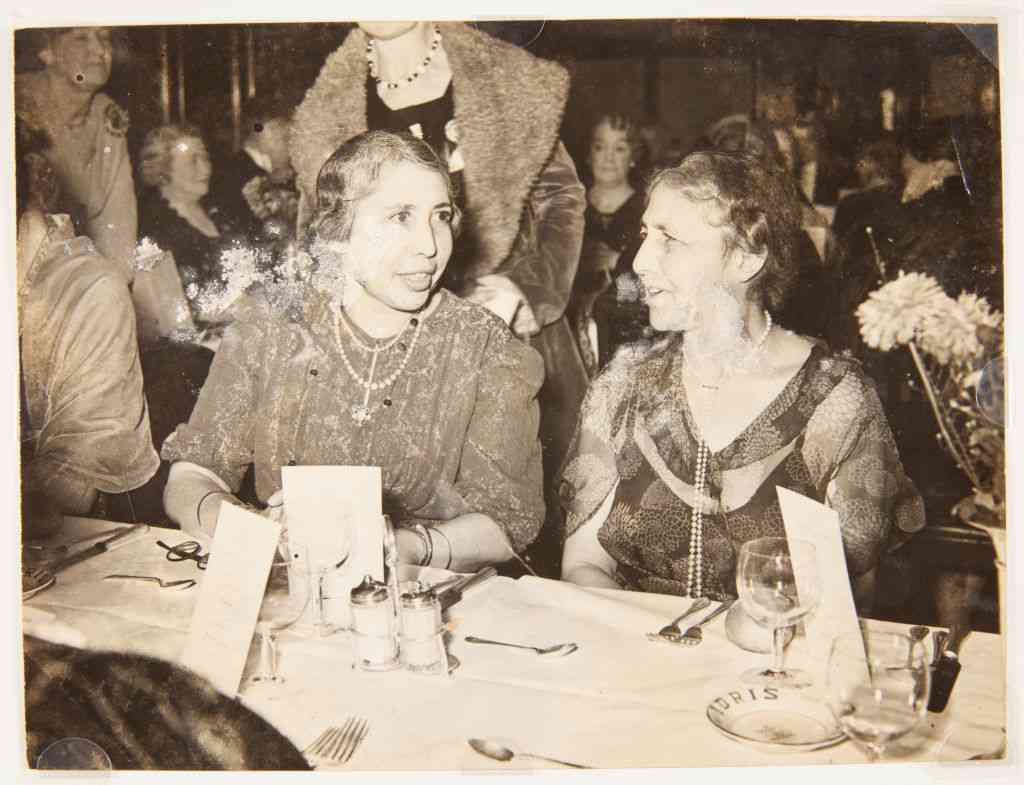
Bamba Sofia Jindan Duleep Singh (named after her mother and both grandmothers) went to medical school in Chicago in 1901 and emigrated to Lahore in 1903. Sophia Alexandrovna became a prominent suffragette and a nurse for Sikh soldiers during World War I. Catherine Hilda lived in Kassel, Germany with her former governess until World War II, when she sheltered nearly a dozen Jewish refugees in her home in Buckinghamshire.
Though their larger-than-life father has been the intermittent subject of popular histories, interest in the next generation soared after the 2015 biography Sophia by Anita Anand, now co-host of the hit podcast Empire. I myself have spent the last five years working on a book about them.
Whatever prior knowledge visitors bring to this moving new exhibition, its power stems from the artefacts it has corralled, not as colonial trophies, but as handmaidens to narrating the three sisters’ long and eventful lives: 117 objects in all, from their score of Richard Wagner’s Die Meistersinger to the tag of one of Sophia’s dogs.
“Fundamentally, visitors come to see things, not read things,” said Polly Putnam, the curator of collections at the Historic Royal Palaces, who has been working on this exhibition since 2023. “Every single claim I made about these women, I wanted to show in an object.”
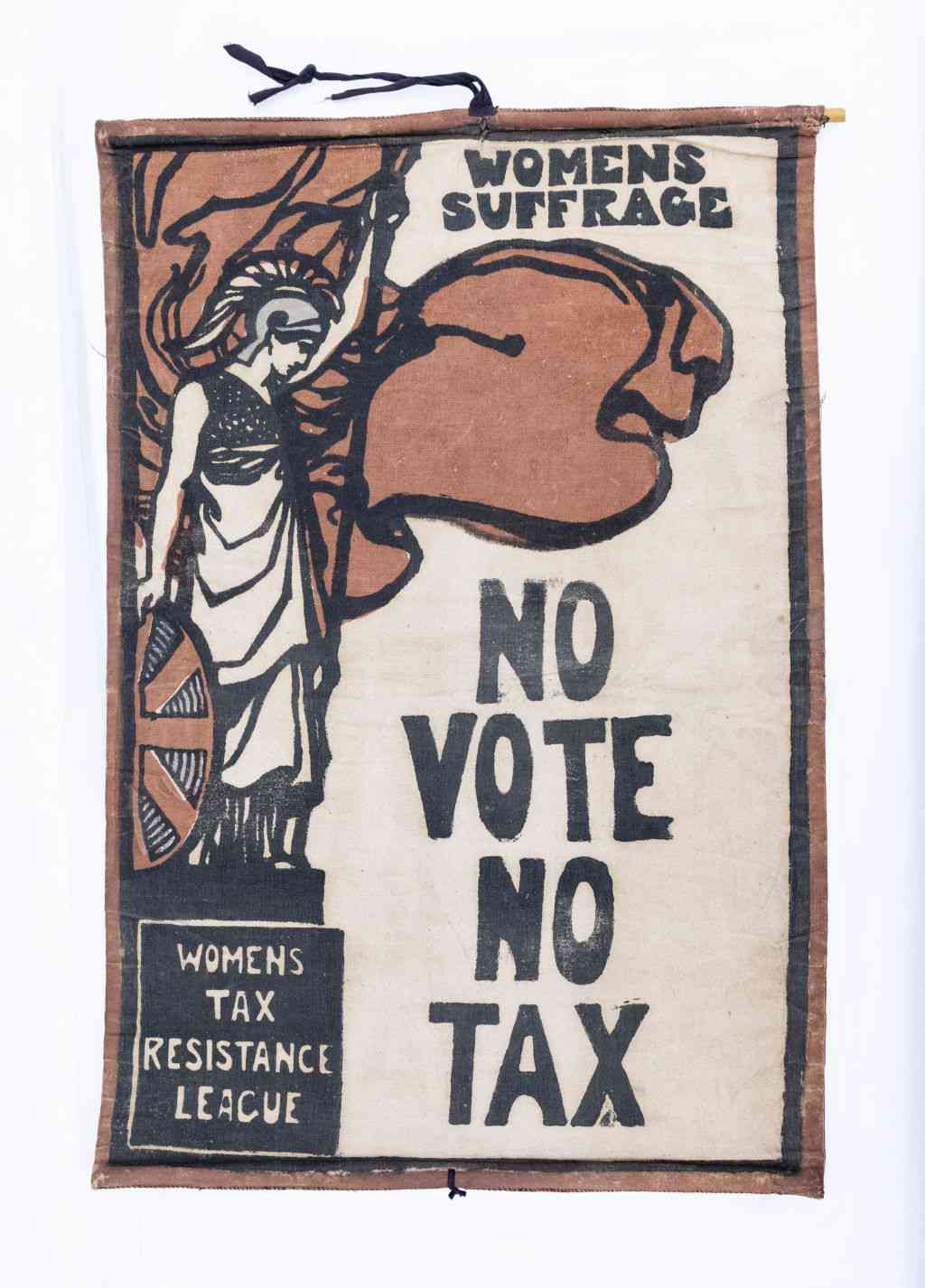
Among the most striking is Sophia’s 1911 spoiled census form, annotated in her own hand: “No Vote, No Census”. Sophia was active in the Women’s Social and Political Union, the militant wing of the British suffrage movement. Her rabble-rousing once led exasperated India Office bureaucrats to sigh, “We appear to have no hold over her.”
Then there’s the Nazi-era passport of nine-year-old Ursula Hornstein, one of the refugees sheltered by Catherine, as well as a jeweled pendant the princess later gave Ursula.
Polly Putnam, the curator, trained as a specialist in Georgian decorative arts; her expertise, she cheerfully admitted, is wallpaper. But after falling in love with the Duleep Singh story – a feeling I know well – she plunged into archives, sat in on university lectures and reached out to Sikh diaspora communities to learn more about their contemporary resonance.
The family carries a special resonance for the Sikh diaspora, many of whom see Duleep Singh as “an icon of Sikh faith and political commitment”, in the words of historian Tony Ballantyne.
Mishka Sinha pointed out that the history of British Sikhs is notably well-preserved, thanks in part to several dedicated collectors who lent objects to the show. When it comes to the Duleep Singhs, chief among them is Peter Bance, the indefatigable British Punjabi collector and historian who has spent decades tracking down and preserving everything connected to the last Maharaja of Lahore.
In the end, the exhibition that Putnam and her team assembled is something far more ambitious than a typical archive-based display.
Perhaps its greatest intervention lies in the domain of love. Standing in front of a handwritten birthday song from the princesses’ brother, Victor, to Catherine, Putnam spoke of how the siblings’ great love for each other remains visible more than a century later. So too is their mother’s fervent piety, and their father’s indignation.
There’s also the opaque but affecting bond between Catherine and Lina Schäfer, her governess turned companion. Catherine’s will instructed that her ashes be sprinkled on Schäfer’s grave in Kassel.
All of these offer an important corrective to the tendency, which I too have encountered, to fixate on the question of their descendants. None of the princesses – nor their two adult brothers – had biological children; all died, in that picturesque phrase, “without issue”. They did, however, have godchildren, comrades, refugees and evacuees under their roofs.
The vast geographic terrain that the princesses traversed, over nearly nine decades, presents a challenge to any historian, requiring a familiarity with such different milieus as Nazi Germany, Edwardian England, Progressive Era Chicago and the Indian Independence movement.
Sinha emphasized that they deliberately brought Partition into the story of Bamba, who lived in Lahore for more than half a century and watched nearly all of her non-Muslim neighbors flee from the planned suburb of Model Town in 1947. Sophia and Catherine also visited India, and Sophia’s diary from her 1906-’07 trip is a remarkable record of her growing sympathy for the anti-imperialist currents sweeping through the subcontinent.
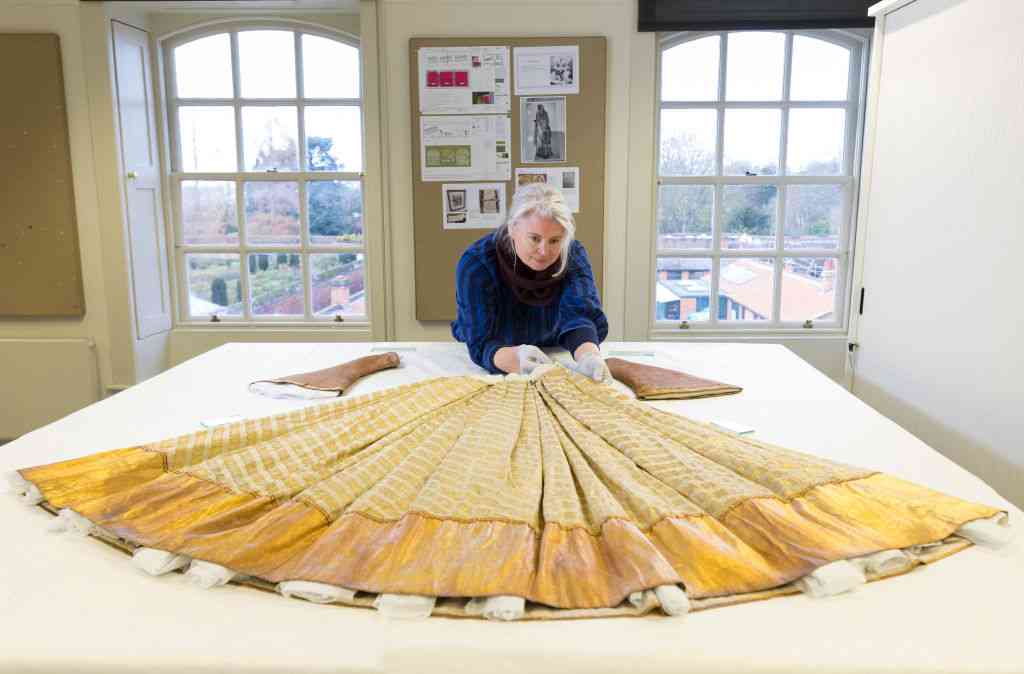
Strolling through the displays, Sinha pointed to a glass case displaying three beautiful gilt-edged textiles, which had been shown for many years in Manchester’s Whitworth gallery as Bamba’s saris. In December, Sinha realised the textiles were only about three metres long – nowhere near long enough to be wrapped as a sari. They were, she realised, dupattas – a distinction that may never dawn on someone who learned about Lahore from books, but is immediately obvious to anyone who has ever worn either garment.
Though the press release had already gone out, the labels were corrected accordingly.
The exhibition is never doctrinaire, ceding some of its most affecting moments to the subjective realm of memory. Working in the impressionistic realm of oral history, Bance and Putnam produced three short films with some of the few remaining people who actually knew the princesses, including Barrall. Also captured on film is Catherine “Drovna” Oxley, Sophia’s goddaughter, whom the princess made promise to always vote – and to never disclose whom she voted for.
At the preview night, Oxley lingered near the exit prompting visitors to tie a ribbon associated with their favorite woman from the exhibition. She picked out a pink one, for Sophia. As for me, it was and is impossible to choose, so I left without a trace.
Krithika Varagur is a writer in New York, a 2025-’06 Fellow at the Dorothy and Lewis B. Cullman Center for Scholars and Writers, and an editor of The Drift and Equator.
